
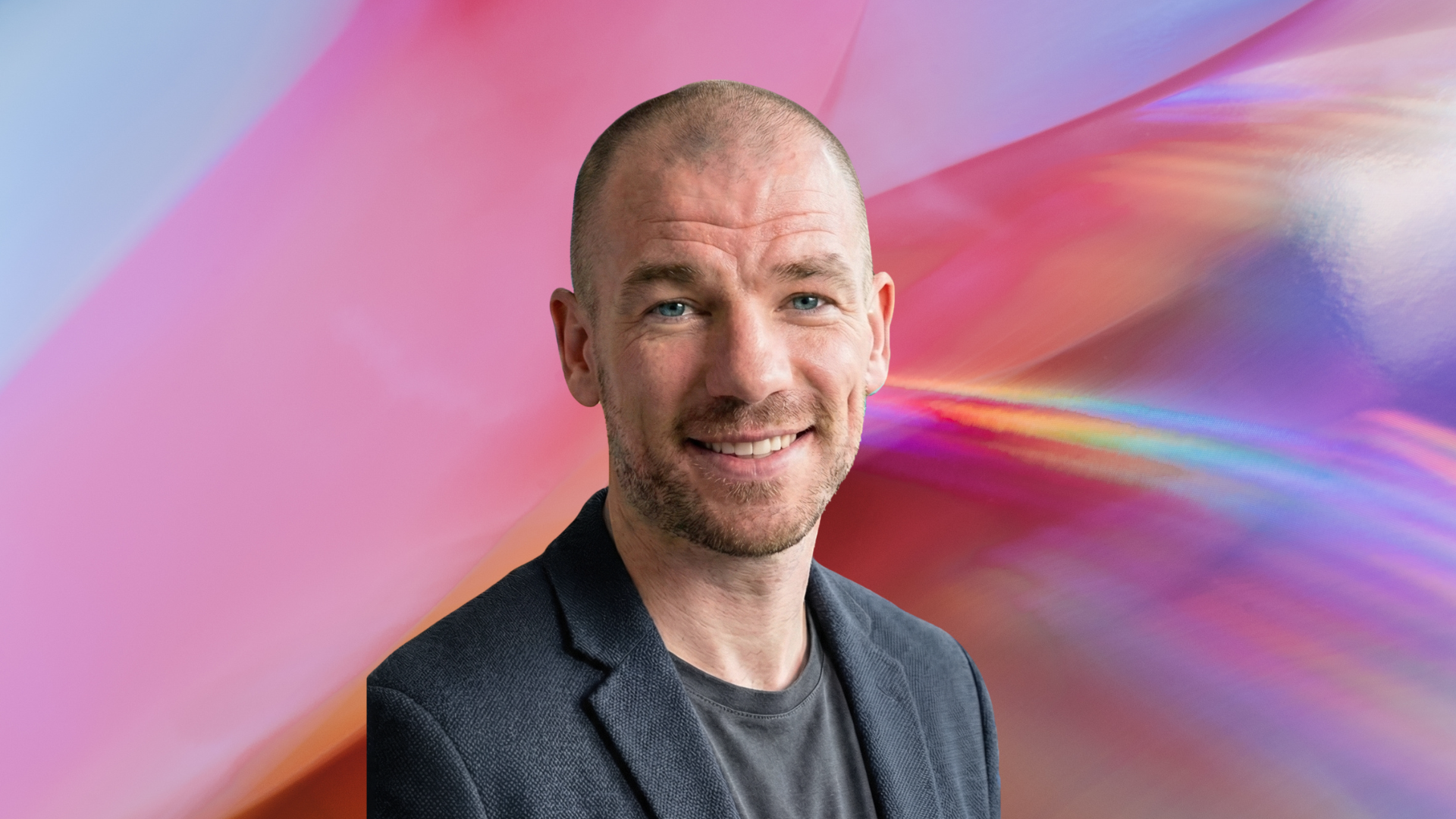
Interview with Richard Good: Marketing that moves the needle
The System Behind the Story: Richard Good on Demand Generation, AI, and Smarter Marketing
Marketing often celebrates creativity, but the real work usually happens somewhere between systems, discipline, and the process of learning what actually works. Figuring out consistent output can be good.
Richard Good’s path into marketing started on the creative side. He began with design, moved into video production, and eventually found himself asking a question many marketers eventually confront. Beautiful content is great, but how do you get it in front of the right people and prove it drives results?
That shift from content creation to demand generation changed how he approached the field entirely. Today his work sits at the intersection of storytelling, performance marketing, and emerging tools like AI. In this conversation we talk about what people misunderstand about content creation, why case studies still matter, how AI is changing advertising workflows, and the systems that quietly power consistent marketing results.
Interview
Suneel Mistry:
We are getting started. Richard, thank you for stopping by for another interview. This is our first across-the-pond conversation, so welcome and thanks for joining.
Richard Good:
Thanks for having me.
Suneel:
Let’s start at the beginning. Tell me about your path into marketing and what brought you to where you are today.
Richard:
From a very early age I was interested in both business and art. I liked drawing and design, so the natural intersection between those things ended up being graphic design. When I went to university, I studied multimedia, which moved me more into video production. That part was not exactly planned, but it became a big part of what I was doing. I worked inside marketing teams doing content work like websites, digital assets, brochures, that sort of thing. Eventually, I moved deeper into video production and started freelancing.
For about a year I ran my own video production business. I was shooting, interviewing, editing, doing motion graphics, really everything. What started happening during that time was that clients would ask a question that I could not answer. They would say something like, “We have invested a lot of money in this video. Is it actually going to generate revenue?”
At that point, I realized I could create strong storytelling content, but I did not understand the distribution systems. I started asking questions like how do we get this in front of the right people, and is the message actually relevant to the audience we want to reach. That was really the moment that pushed me deeper into marketing. I started thinking less about just producing content and more about distribution, delivery, and revenue outcomes.
Suneel:
You mentioned starting as a content creator. It is kind of a catch-all term now. What do you think people misunderstand about content creation today?
Richard:
The biggest misconception is that people think it is easy. There is a perception that with AI tools, anyone can create content quickly, so people assume it is low-hanging fruit. In reality, when you look at teams that produce meaningful content consistently, they are surprisingly rare. Creating something that genuinely resonates takes time and experience. There are many moving parts. For every top-tier creator, there is likely a manager, editor and camera person you do not see. It is not just producing a video or writing an article. You need to understand the audience, the context, and the purpose behind the content. AI can help with quantity, but meaningful content still requires judgment.
Suneel:
That connects to the quality versus quantity discussion that comes up a lot right now. When you are looking at content yourself, what kinds of stories do you find most compelling?
Richard:
Case studies, without question. They are powerful because they combine multiple elements. You have data and facts, which are important in business. But you also have the human story of someone who used a product or service and moved from one situation to another. It is the classic narrative arc. There is a problem, a journey, and an outcome. Case studies allow you to present measurable results while also telling a real story. That human element is incredibly persuasive. Another thing people often say is that case studies are difficult because customers do not want to reveal information about themselves. My experience is that there is almost always a creative way to anonymize details while still telling the story.
I also had a conversation with a colleague who is a leading international SEO specialist. We were discussing how search is changing, especially with AI. His view was very simple. Stop writing generic articles. Focus on case studies. His argument was that if your content overlaps with information that already exists online, there is little reason for search engines or AI models to surface it. A case study introduces something new. It is a human experience that did not exist on the internet before.
Suneel:
That idea of expertise is something I see more often now. It is the difference between a generic article and something written by someone who has actually done the work.
Richard:
Exactly. Search engines increasingly look for signals that the content comes from a real expert. That could be a named individual, a company, or someone with experience in a particular field. When you attach a real person to the work, it adds credibility. It signals that this is not just another generic piece of information.
Suneel:
From a technology perspective, what excites you right now about how marketing is evolving?
Richard:
There are two areas where AI has had a major impact for me. The first is advertising. Creating ads is significantly easier than it was even a year or two ago. Previously, you had to manually write multiple variations of copy and experiment with different angles. Now you can generate those variations quickly and systematically. The second area is campaign optimization. When you are managing a live advertising campaign, there are dozens of variables you can adjust. It is easy to start meddling with things too quickly. I often use AI as a second set of eyes before I change something. It helps evaluate trends and predict outcomes. Sometimes it will tell me not to touch anything and just let the campaign run. Interestingly, the predictions have been very accurate. If it says performance will trend toward a certain number in two weeks, it has usually been correct.
Suneel:
It sounds like the key is how you use AI rather than letting it do everything for you.
Richard:
Exactly. For me, it acts more like a sounding board. One example is how I use it to evaluate ideas. When you work for yourself, you constantly generate new ideas, but that can be a problem. You start too many things and finish too few. Now, when I get excited about a new idea, I often debate it with AI first. More often than not it helps me realize that the idea is not worth pursuing. That discipline has helped me start fewer things but actually finish them.
Suneel:
Are there specific prompts or workflows you use regularly?
Richard:
Two main ones.
The first is visual feedback. I often upload screenshots of designs or layouts and ask for critique. I trust AI more for visual structure than for writing. It is very helpful for things like landing pages, mobile layouts, or social posts. It can quickly point out issues with hierarchy, spacing, or clarity.
The second workflow is deconstructing other companies’ work. If I see a campaign or piece of content that I like, I analyze it first myself and write down my thoughts. Then I ask AI to help break it down further. Why does this work? What elements make it effective? One surprising insight I discovered from doing this was how short strong headlines tend to be. Many high-performing campaigns use just four or five words. That one small detail ended up improving my work significantly.
Suneel:
That “keep it simple” principle always seems to come back.
Richard:
It does. We tend to overcomplicate things.
Suneel:
Let’s shift to soft skills. Beyond technical marketing knowledge, what abilities have become more valuable in your work?
Richard:
Thinking in systems. Early in my career, I focused on individual pieces of content. One article, one video, one campaign. Over time I realized the real value comes from building systems that produce consistent output, think modular building blocks. The secret to content is not a single great piece. It is repetition and consistency. Another thing I do is role-play meetings in advance. I will simulate conversations with colleagues or clients to clarify what I want to achieve and what they might need from the meeting. That preparation saves time and energy. It also helps structure collaboration more effectively.
Suneel:
You focus a lot on demand generation. For people who may not be familiar with the term, how do you explain it?
Richard:
At its core, demand generation is about guiding people through awareness. First, they need to understand that they have a problem. Then they need to understand possible solutions. Finally, they need to feel ready to take action. Content plays a major role in this process. Early-stage content highlights pain points. Later content introduces solutions and expertise. Thought leadership is especially powerful here. If you can capture the expertise inside your organization and share it through videos, articles, and other formats, it becomes a scalable way to build credibility.
One concept I like is giving your audience the language they need to advocate for change inside their own organizations. If they can explain the problem clearly and reference your expertise, it becomes easier for them to persuade their colleagues.
Suneel:
So it is not just one big piece of content. It is the smaller pieces that circulate around it.
Richard:
Exactly. A case study might become short clips for social media, slides for a sales presentation, or smaller insights that spark interest. Everything connects back to the same core story.
Suneel:
Before we wrap up, what is one misconception you see inside marketing teams today?
Richard:
The idea that you always need to create new content. Most organizations already have excellent material somewhere. Product documentation, internal reports, research, case studies. The problem is that very few people have seen it. Teams often launch something once and move on. But creating new content can take months. There is often more value in repeating and reinforcing your core expertise. Marketing teams sometimes get bored with their own content because they see it every day. But the audience has barely seen it at all. It is a bit like wearing the same shirt to multiple meetings. If nothing happened to it, you do not need to wash and iron it every single time.
Suneel:
There is a stat that says people need to see something seven or eight times before it really sticks.
Richard:
Exactly. Consistency matters more than novelty. People increasingly discover ideas through small fragments across different channels before engaging with deeper material like reports or gated content. Social platforms are increasingly becoming the shopfront, rather than the traditional journey of driving people directly to a website.
Suneel:
Last question. What is good for you right now, personally or professionally?
Richard:
One big change for me recently has been understanding my own limits. For a long time I worked in cycles where I would push extremely hard for several weeks and then crash. That pattern was not sustainable. Now I focus on doing fewer things but doing them consistently. I keep a more structured schedule and avoid overcommitting. Interestingly I am getting far more done than before. From a professional perspective I am also excited about how much faster it is to build account-based marketing campaigns. AI has drastically reduced the time required for research, targeting, and setup. That efficiency opens up new possibilities for experimentation.
Suneel:
That is great to hear. Thanks again for your time. I really enjoyed the conversation.
Richard:
Thanks for having me.









No Comments