
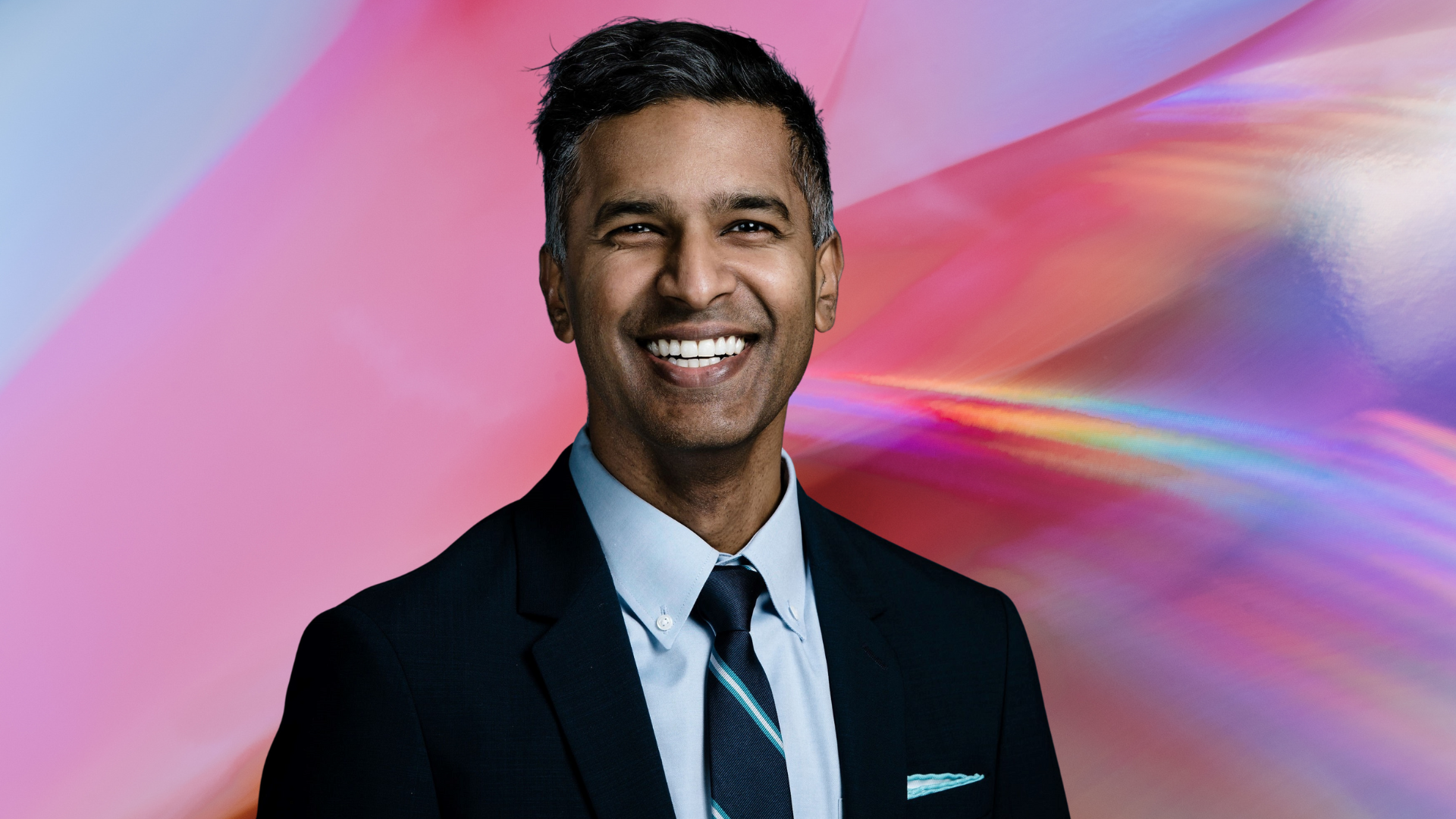
The Art of Communication: Interview with Philip De Souza
Suneel Mistry: Hi Philip. Thanks for joining us for this session on creativity, storytelling, and everything in between. I’d love to start with your path into marketing and communications. What has the journey been like getting to where you are today?
Philip D’Souza: It’s been a long path, a long journey. In school, I did a double major in political science and communications, and afterward, I took a one-year post-grad in corporate communication management, which I loved. My first role was a contract job at a not-for-profit doing all their comms and marketing as a team of one. I learned a lot.
After that, I had a short stint at HIROC as a student intern in IT of all places. A position in the communications department opened up six or seven months later. I applied, I got it, and the rest is history. I’ve been lucky to have great mentors and so many opportunities here, and I’ve kept going with continuous learning. Even now.
Suneel: I didn’t realize most of your career has been at HIROC. What has that been like as a marketer staying in one industry?
Philip: It’s very different. Staying in one place for a long time is rare nowadays. There was a moment midway through my career when I wondered if I should move around like all my friends. But I genuinely loved where I worked. I had opportunities to do what I wanted, try new things, and push boundaries. That really kept me here.
Suneel: So what excites you about the healthcare and insurance space?
Philip: It feels like something bigger than me. I work In healthcare for a not-for-profit, and I feel like even in a small way, I’m supporting the system. It’s not like creating a thirty-second ad to sell something. It’s different. It lets us use the tools in our marketing and communications toolbox to find solutions that aren’t templates. It’s not a checklist. There’s a ton of nuance to the work we do.
Suneel: That’s the cool thing about non-traditional industries. You talked about storytelling. What kinds of stories are you drawn to?
Philip: People stories for sure. Look, Insurance isn’t sexy, so the stories that matter are about the people we work with or the people we serve. Amplifying their successes, That’s where you can see real changes being sparked. I also love infusing humour and human elements so the story feels real and not like a sales pitch. Authentic stories land differently. People can feel it.
Suneel: On a side tangent, Scarborough Health Network has been doing interesting communications work. As someone from Scarborough, I always feel it. It feels similar to what you’re talking about.
Philip: Yes. Their campaigns leaned into the people who live there. This is who we are. This is our community. The demographic is diverse, people come from all over, and they tap into that sense of belonging. The music, the imagery, the nostalgia. Even if you’re not physically in Scarborough anymore, you still feel it. It’s where your roots are.
Suneel: Exactly. Even a street corner or a mall sign can transport you back. City design, fonts, how spaces feel. People don’t think about those things, but they shape us. Being in developing nations now, I see the contrast more clearly.
Looking at your recent work, what has been exciting or challenging?
Philip: Most recently, we have a new strategic plan launching in January. As communicators, we know strategic plans can be a lot of words. So the challenge was how to bring it to life in a unique way. Healthcare and insurance marketing is quite “safe”. So, I asked, “How do we spark interest and joy?”
And what resulted is that we leaned into art. I personally love art, galleries, and the whole experience of taking in all forms of art. So, building on that, we’re creating a gallery wall called The Art of Safety. Each wall has a giant keyword in bold typography with layered imagery that speaks to the priorities underneath that pillar. It’s abstract but intentional. I’m proud of how the entire team rallied around the idea and am super excited to bring it to life before the launch.
Suneel: That’s really cool. When I arrived here, I had to build a communications strategy. It’s tough when you’ve never had to formalize one before. Hearing your take is interesting because you’ve been in the culture longer and can remix and build on what exists.
Philip: I love that word remix. That’s exactly what it is.
Suneel: Over your career, what marketing skills have been most valuable?
Philip: It’s all about always understanding what’s in it for the audience. When you create something, it’s important to ask yourself, “So what?”. And “Will this help the audience understand something or take action?” It’s also critical to know your segments and what moves each of them.
And repetition is key too. We think we can’t post something twice, but algorithms don’t show everything to everyone. The second or third time might be the one someone sees. Repetition builds memory. It builds a connection. Someone might like it the first time, amplify it the second time, and share it the third.
Suneel: I feel that. You spend hours making something someone sees for five seconds. But repeated exposure builds trust and fandom.
Philip: Exactly. We forget that because we’re immersed in it. SNL does this well. The first time I see a sketch on IG, I might like it, the second time I might love it, and the third time I send it to a friend. That is human connectedness.
Suneel: You mentioned your team. How do you help people grow those intangible skills?
Philip: Let people lean into what brings them joy. My old boss taught me that. She knew I loved the show Big Brother and once asked me to write a recap as an exercise. Not for work, but to unlock a different voice. It made me more confident in my writing style.
With my team, if someone loves fashion or chess or fragrances, I want them to follow that curiosity. That’s how creative concepts come to life and happen. Our annual review design came from looking at campaigns from Loewe a few years back. Fashion and insurance have nothing to do with each other, but we loved the aesthetic and used that as inspiration, as the framework.
Suneel: And these days, AI can make anything sound generic. What you’re talking about is the opposite.
Philip: Yes. AI is here, and it’s useful, but humans know when something feels real. We want to be moved by something genuine. That’s why certain campaigns work. The recent Gap ad with Katseye and their choreography is a good example. Real performers, real emotion, real music, and it surely resonated.
Suneel: Speaking of staying inspired, how do you stay creative?
Philip: By absorbing things outside my sector. Fashion, art, pop culture, design. I took a candle-making class last weekend because I’m currently in my “scent era” right now. I love fragrances. Watching how the wax is poured, the tools, the labels, the experience. All of that sparks ideas. Creativity comes from curiosity.
Suneel: And user experience shows up even in insurance. There’s so much room to make things more human.
Philip: Yes. Even calling a customer right after they submit a form or complete a survey can create a connection. You get a story. You might get a testimonial. You build community. Simple things have ripple effects. But of course, these touchpoints help you finesse and fine-tune existing user experience structures and more!
Suneel: Switching gears, how do you balance strategic thinking with getting the day-to-day work done?
Philip: It’s tough. But no matter your role in the organization, marketers should think strategically. It shows vision. A high-level strategy gives you a solid framework so that when new requests come in, you know where they fit. It sets direction and shows how marketing contributes to overall success.
Suneel: Anything else on your mind from a big picture perspective?
Philip: Our podcast, Healthcare Changemakers. We’re over 80 episodes now. I’ve been thinking about elasticity. How do we stretch the brand? We’re creating something called Change Maker Day, where people can recognize someone in their own healthcare community with a downloadable certificate. Change makers aren’t only leaders. They’re everywhere. And with this, the goal is to tie it all back to the podcast.
Suneel: I love that. Change can come from any level.
Before we close, something more personal. What is good, what is challenging, and what’s next for you?
Philip: Challenging would be school stuff, I’m currently focused on while working. I’m doing formal education again, and going back to the rigour of homework and exams is no joke. Balancing priorities is tough.
What’s next is keeping my eyes on new trends and trusting my gut as a marketer. What’s good is the people I get to talk to, like you, and my amazing team, and the work I get to do every day. I truly am blessed with all of that. Hopefully, some travel over the holidays before the new year begins.
Suneel: Thank you, Philip. This was great.









No Comments