Interview with Oleta Williams: Momentum for Conservation
Building Momentum where it matters.
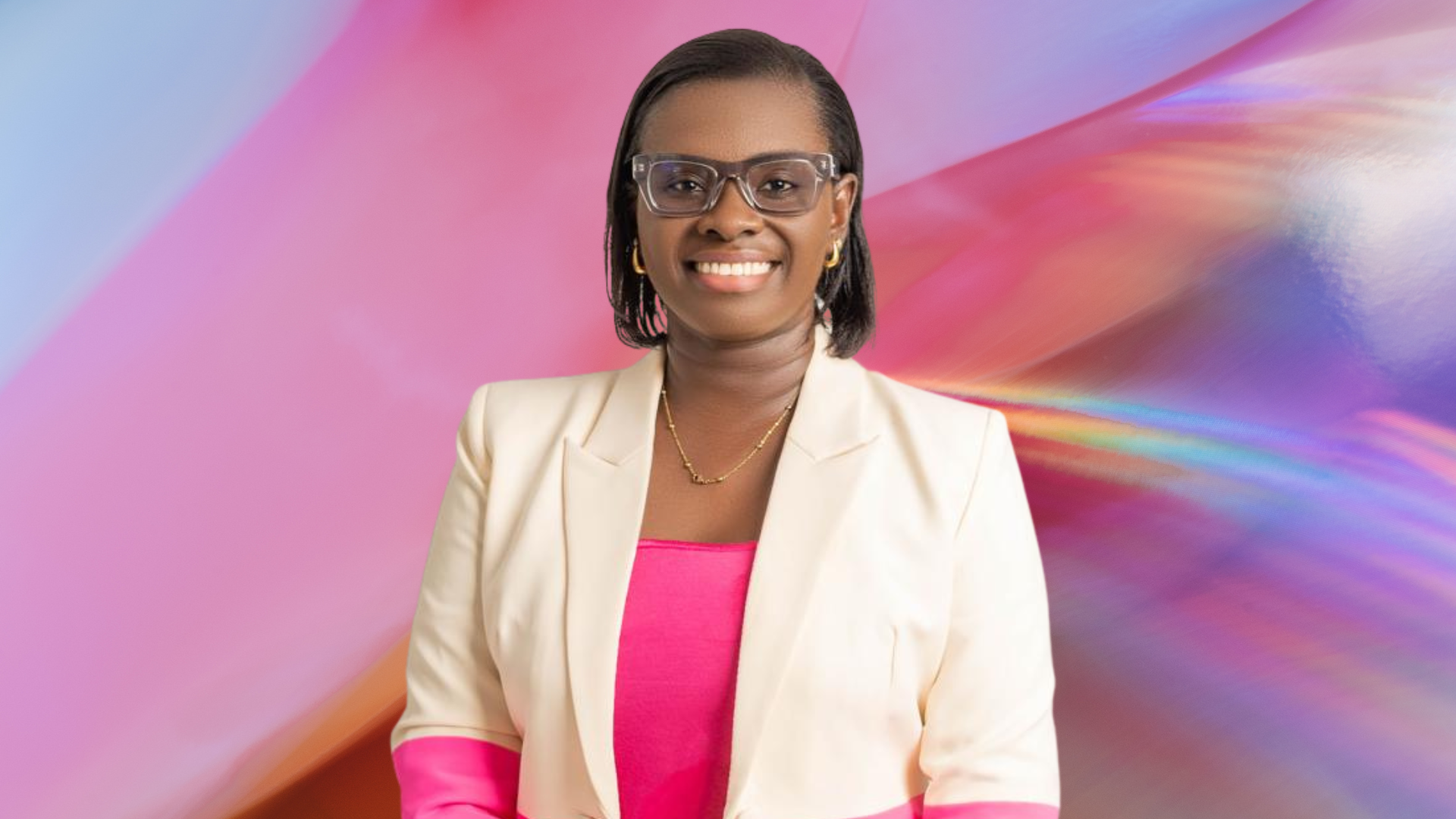
Oleta Williams is the Executive Director of the Protected Areas Trust in Guyana, the country’s national conservation trust fund. Over the past year, she and her team have been navigating growth, storytelling, and systems building while balancing the realities of conservation work on the ground. In this conversation, Oleta speaks with Suneel Mistry about her career path, why communication matters in conservation, and what it means to build something that lasts.
Suneel Mistry:
Thanks again for doing this. We’ve had a lot of conversations over the past year, but I wanted to sit down and actually document the journey. Not just where the organization has gone, but how you think about storytelling, especially in conservation. You have a unique vantage point, not just locally, but across South America. I’d love to start at the beginning. What did your career path look like before PAT, and how did you end up here?
Oleta Williams:
I’ve been at the Trust for almost four years now, so it’s probably coming up exactly on four years. Before that, I like to describe my career as a portfolio career. I worked across the public sector, international development agencies, and project-based roles.
My first official job was as an intern with the University of Guyana, where I was placed at the Environmental Protection Agency. That was my first real entry point into the public sector. After that, I moved into working with international development agencies, specifically the Inter-American Institute for Cooperation on Agriculture. I worked as an administrator on a project that supported women agro-processors.
That role really shaped me. Even then, it was clear that telling the story of the people behind the products mattered. These were real products made by real people, and if they were going to succeed, their stories had to be told properly.
From there, I spent more time in the public sector, including work with the Lands and Surveys Commission, initially as a land use planner. That role evolved into more technical work, then project and program management and being an executive assistant. Eventually, I started working with the United Nations, which deepened my experience with donor-funded projects and program execution.
When the opportunity with the Protected Areas Trust came up, it felt different. Conservation trust funds were not something I was deeply familiar with at the time, even though they exist across many countries. But when I saw the role, I took a leap of faith. It was something new, and the rest is history.
Suneel:
That path says a lot about non-linear careers. You’ve moved across sectors, borrowed skills, adapted to new environments. Was that challenging, or did it feel natural?
Oleta:
A bit of both. I’ve always been up for a good adventure, and I tend to gravitate toward things that are different. I’ve also always liked project work because there’s a clear beginning and a clear end. There’s something satisfying about taking something from nothing to something concrete.
Working with the UN and later with PAT brought that project mindset into sharper focus. It hasn’t been easy. There are always challenges. But it’s about balancing what you aspire to do with what’s realistic on the ground. You have to hold both at the same time.
Suneel:
When I joined last year, there was already momentum around storytelling here. It wasn’t something we were starting from zero. You mentioned your background in agriculture and agro-processing. Where did that initial push toward storytelling come from for the Trust?
Oleta:
When I joined PAT, I realized pretty quickly that I didn’t fully understand what a conservation trust fund was, and in talking to stakeholders, I realized many others didn’t either. That actually made me feel less bad about my own learning curve.
It became clear that the story of PAT and the role of a conservation trust fund needed to be better understood, especially in Guyana. Natural heritage is central to who we are as a country, and we play a critical role in protecting that. But the story wasn’t widely known.
So for me, storytelling started as part of my own learning. I needed to understand the organization’s story in order to do my job properly. And then it became about giving others that same opportunity to understand what we do and why it matters.
Suneel:
One of the interesting things for me was realizing that storytelling didn’t require inventing anything new. The stories were already there.
Oleta:
Exactly. That was one of the biggest lessons for me early on. You don’t need to come up with wild ideas or sit for hours trying to conceptualize something abstract. The stories already exist. They’re right there.
Once you start talking to people and engaging with them, the stories emerge naturally. That realization made the whole process feel lighter and more achievable than I initially thought it would be.
Suneel:
That resonates with my experience, too. So much of what happens in the protected areas is unseen, both internationally and locally. People don’t always get to see what happens beyond a single visit or a single trail. There’s so much more depth there.
Oleta:
Yes, and that depth is important. It’s not just about showcasing a place, but about showing the people, the systems, and the work behind it all.
Suneel:
I want to go back to the agro-processors project for a moment. What did that experience teach you that you still carry today?
Oleta:
That project was the establishment of a women-led agro-processing network, and I was the first administrator. It was also my first time working closely with international volunteers. My role was to act as a local counterpart, ensuring continuity when volunteers came and went.
What stayed with me was how deeply relationships mattered. Many of those volunteers are still close friends today. Some of them were a major support system for me when I later studied in the UK.
The organizations themselves had good products. One group worked with cocoa beans to produce chocolate and cocoa sticks. Another ran a peanut factory. The products existed, but they needed better development and better marketing, especially for urban markets like Georgetown.
That’s where branding and storytelling really came into play. I ended up learning graphic design out of necessity. I took training courses, experimented with layouts, and eventually even started a small design business inspired by that work.
Looking back, it was one of the lowest-paying jobs I ever had, but one of the most fulfilling. It shaped so many aspects of how I work today, from storytelling to working with Indigenous communities to understanding value chains and product development.
Suneel:
It’s interesting how accessible tools have changed that landscape. Today, software makes things easier, but there’s something about learning from scratch that builds a deeper understanding.
Oleta:
Absolutely. Templates make things faster now, but there was real value in building everything from the ground up. I still see labels in shops today that I worked on years ago. Sometimes groups even reach out asking if I still have the files. That work stays with you.
Suneel Mistry:
One thing we’ve talked about a lot is communication as a skill set. Not just marketing, but communication as a way of working. What skills from that communications toolbox have been most useful for you as a leader?
Oleta Williams:
The first thing that comes to mind is natural conversational flow. I recognize the importance of preparation and structure. Scripts matter. Planning matters. But there’s also something very powerful about being genuine in how you communicate.
Earlier in my career, I thought of communication as something very structured. I’m a structured person by nature, so that made sense to me. But I’ve learned that there’s a different kind of effectiveness when communication feels natural and conversational. That authenticity carries weight.
Another major skill is understanding how technology has transformed communication. The fact that we can sit here and record a conversation without overthinking the technical side of it makes a huge difference. Technology can feel intimidating, but once you understand what tools are available, it actually makes the work feel lighter and more enjoyable.
Suneel:
That accessibility really changes things, especially in the nonprofit space. There used to be real trade-offs. Do you spend money on software, or do you spend it supporting a community?
Oleta:
Exactly. Those decisions are very real. So knowing what low-cost or no-cost tools exist is incredibly important. It allows organizations to move forward without feeling like they’re sacrificing their core mission.
Suneel:
The point you made about authenticity feels especially relevant now. With so much content online, people just want to hear real conversations from people who actually know what they’re talking about.
Oleta:
I agree. There’s still a lot of work to be done, but I’m happy to be part of this moment. We’ve learned so much over the past year. I can only imagine what five or ten years from now will look like. It’s exciting, even if it’s a little scary.
Suneel:
The Trust has invested real time and resources into building these systems. That doesn’t happen by accident. Where does that motivation come from for you?
Oleta:
I want to see things done better. I believe we’re all here for a reason beyond what’s written in our contracts. For me, it’s about building some kind of legacy.
We’re not here forever. The question is what impact you leave behind. I can see where the gaps are, and if I can help make something better, then I feel a responsibility to do that. It’s about empowering people, bringing the right people together, and encouraging everyone to contribute meaningfully.
Suneel:
That idea of progress over perfection comes up a lot. Even small improvements matter.
Oleta:
They really do. Even one additional outcome is one more than you had before. That matters. Growth is incremental, both professionally and personally. Everyone grows at different stages. The important thing is seeing movement, seeing improvement.
Suneel:
I want to shift to something lighter for a moment. What books, shows, or films have influenced you?
Oleta:
One book that stands out is The Secret. It focuses on visualization and positive energy. That resonated with me.
I also have a soft spot for Law and Order. I don’t have a scientific explanation for that, but it’s something I keep coming back to.
And then there’s Planet Earth. My dad introduced me to it when I was very young. He was a teacher and brought back DVDs when he lived abroad. Watching those documentaries sparked my interest in environmental conservation. The storytelling, the narration, the way the natural world was presented, that stayed with me.
From time to time, I still go back and watch clips to remind myself where that initial spark came from.
I’m also slowly working my way through Atomic Habits. It’s taking longer than expected, but I’m getting there.
Suneel:
That idea of execution comes up a lot for both of us. There are so many ideas, and the challenge is bridging that gap between idea and action.
Oleta:
Sometimes we overthink things. Everything starts with an idea. If you sit on it too long, someone else might do it first. I tend to move quickly from idea to execution. You figure things out as you go.
Suneel:
Looking ahead, how do you see communications continuing to grow at the Trust?
Oleta:
I want PAT to become a model for environmental and conservation communication in Guyana, and potentially beyond. Other sectors have figured this out. Environmental work hasn’t fully cracked that code yet.
I don’t know exactly what that looks like in terms of staffing or budget, but I do know that with a small, focused team and a thoughtful approach, you can create significant impact.
Suneel Mistry:
One thing we’ve touched on but haven’t fully unpacked is personal storytelling. Organizational stories are one thing, but personal visibility is different. How has that felt for you?
Oleta Williams:
Personal storytelling has been a challenge for me. I’ve never been someone who feels naturally comfortable sharing a lot about myself. Historically, I’ve felt that my work should speak for me. If you ask me to do something, I’ll deliver, and that output becomes the story.
I never really saw personal storytelling as important. I focused on results. But I recognize now that people connect differently when they understand who is behind the work. That’s something I’m still learning. It’s a work in progress.
I think of it almost like reading silently versus reading out loud. Personal storytelling feels like reading out loud. It takes practice.
Suneel:
One way I think about it is curation. You don’t have to share everything. You can decide what parts of yourself and your values you want people to see.
Oleta:
That makes sense. Finding that balance between personal and professional is important. It’s not about oversharing. It’s about helping people understand what you stand for.
Suneel:
As organizations grow, that balance becomes even more complex. People often engage more with individuals than institutions.
Oleta:
That’s true, and it’s something I think about a lot. I don’t want communications to become about me as a person. I want it to be embedded in the institution itself, something that continues regardless of who is in the role.
It’s about leadership style and vision rather than personality. I want communications to be something PAT is known for, something that’s maintained over time.
Suneel:
That institutional mindset really shows. Over the past year, one thing I’ve noticed is how collaboration has increased across the organization.
Oleta:
When I reflect on the year, innovation and collaboration stand out the most. We’ve done things we hadn’t done before. Trainings, conferences, partnerships. A lot of it came from informal conversations where someone had an idea and we decided to try it.
Innovation forced collaboration. Finance had to work with program teams. Different skill sets came together. That, for me, has been one of the clearest indicators of progress.
You don’t know where one idea might take you. If it works, great. If it doesn’t, you’ve still learned something. But you have to be willing to try.
Suneel:
That mindset really shaped my experience here. It felt like an all-hands-on-deck environment. Less about job descriptions, more about figuring things out together.
Oleta:
That was important to me, especially when bringing in volunteers. It’s not just about what someone can do for the organization. It’s also about giving them an authentic experience. Seeing the good and the bad. Being fully immersed.
I’m glad you felt that. And I’m grateful for the impact you’ve made. That creates a responsibility on our end to carry things forward, not let the work disappear.
Suneel:
That idea of momentum has been on my mind too. When someone leaves, the question becomes how the system adjusts and continues.
Oleta:
Continuity is always a concern, especially with volunteers. But I’m confident in the foundation that’s been built. The ideas are there. The structure is there. Now it’s about how people step into that shape and keep it moving.
Suneel:
Living and working in Guyana added another layer to that experience for me. It wasn’t just professional growth, but personal growth too.
Oleta:
I always encourage people to spend time abroad if they can. It gives you perspective. When you step into a different context, you learn to appreciate what you have, and you grow in ways you don’t expect.
That experience stays with you.
Suneel:
As we wrap up, I want to end with a question we’ve asked in other conversations. What’s good, what’s challenging, and what’s next for you?
Oleta:
What’s good is the team. We’ve built a strong core group, supported by a committed board. There’s a real sense of momentum, even if it sometimes feels overwhelming.
What’s challenging is the constant desire to do more. That pressure can be self-imposed, and I’m learning to manage it better.
What’s next for me personally is completing my PhD. It’s something I’ve delayed for a long time, and I’m ready to see it through. From an organizational perspective, the next year will be a big one for PAT. There’s a lot ahead, and I’m excited to see where it takes us.
Suneel:
It definitely feels like a big year.
Oleta:
It does. And I have a feeling the year after that will feel even bigger.




No Comments