Interview with Helio Hara: Cross Pollinating Creativity
Interview: Helio Hara on Curiosity, Cross-Pollination, and Communicating a Changing World
Helio Hara has spent his career moving between journalism, art, culture, and environmental communication. Today, as Head of Communications at Fundação BioAtlântica in Brazil, he blends these worlds into a perspective that is part storyteller, part strategist, and part cultural observer. In this conversation, he and Suneel discuss curiosity, mixing references, the complexity of modern communication, and why beauty remains important.
Suneel Mistry
Thanks for joining me, Helio. I have read some of your past work and was excited to include you in this project. If you do not mind starting off with your name and your role?
Helio Hara
Sure. I am Helio Hara, Head of Communications at Funbio. My background is in journalism. I worked in traditional media for a while, but I slowly realized my interests were broader than journalism itself. I was drawn to communication as a whole and all the different ways information and ideas move.
I worked at a large company, and then I created a hybrid magazine and book project with a photographer in Brazil. We called it a mook. A friend in Tokyo saw it and said, This is not a magazine or a book. This is a mook. It became a very personal and experimental space where we invited people from all kinds of backgrounds to create around a single theme.
Suneel
You and a photographer created this project. Can you talk about how it worked?
Helio
Each issue had a theme like money, ambition, or desire. We wrote a brief. Something very open. Almost a provocation. And we sent it to contributors. They could interpret it however they wanted.
We had all kinds of outcomes. One artist created chairs made of meat and organic materials. A well-known Brazilian actor dressed up as a bunny and walked the streets, creating this rushed rabbit persona. Nothing needed to make traditional sense. It just needed to make sense for the author.
Over time, it turned into commercial work. Brands wanted to reach niche audiences who were not responding to traditional invitations. So we created artistic experiences for them. One of my favourites was inviting people to spend an evening with an artist who was a compulsive collector of objects. She would unbox piles of things she found. Photographs, needles, scraps. Then a writer would sit next to her and create a fictional narrative that wove the brand’s values into her world. It was unusual, but the brands loved it because the right people actually showed up.
Suneel
It reminds me of zine culture. Smaller communities, higher engagement, people who really care. And you mentioned journalism as your foundation. What made you want to get into journalism?
Helio
Curiosity. And writing. Writing has always come naturally to me. I enjoy imagining people’s stories. When I was a kid on public transit, I would look at strangers and imagine their lives. It is not exactly journalism, but it comes from the same instinct. Wanting to understand. Wanting to see beyond the surface.
I was never interested in covering the economy or city beats. What fascinated me were people. Profiling, understanding their worlds, writing multisensory stories. I like imagining smells, textures, and colours. Even if it is a text story, I think visually. And if it is a visual story, I imagine scents or sounds. That mix excites me.
Suneel
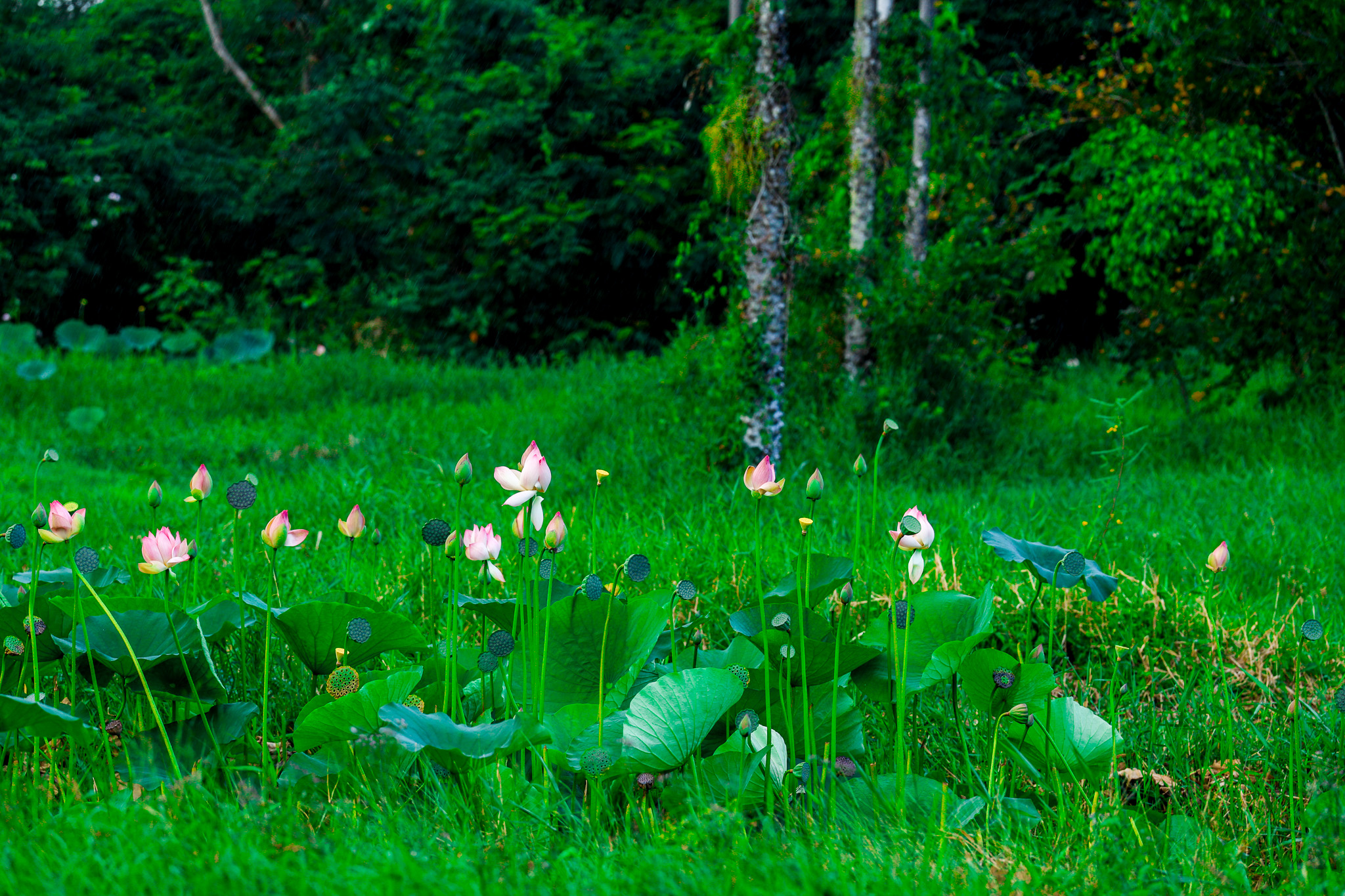
That makes a lot of sense. Especially being in Guyana. So much of what I experience here is sensory. The heat, the air, the greens. It is not the same kind of green you see in Toronto. So how do you tell a story if you only have words?
Helio
Exactly. You might not be able to describe why the green is different, but you can build references. You can give people a metaphor and let them imagine their own version of that green. Storytelling creates that space. It does not force everyone to picture the same thing. It opens room for interpretation.
Suneel
It is the same with writers. You put four writers in the same room with the same objects and they will come back with four completely different stories.
Helio
Absolutely. We had an exercise here recently with a board full of animal photos. The prompt was which of these represents our brand. People went in completely different directions.
A biologist hesitated because she was not sure if one of the animals was a Brazilian species. I was not thinking about geography at all. I was thinking about symbolism. What an ant or an owl represents. We were looking at the same images, but our readings were totally different. That is the power of narrative. Or the lack of one.
Suneel
I have been thinking a lot about that too. So, from your experience, what skills have mattered most in your career?
Helio
Mixing references. Bringing different worlds together. I have always lived between art, culture, and environmental issues. When you combine perspectives, you create small surprises. Something people cannot quite name, but they feel drawn to.
For example, fine art photography has one visual language, and environmental photography has another. When you borrow a detail from one and place it inside the other, it becomes interesting. People do not need to know why it feels different. They just sense it.
I think that the ability to mix and cross-pollinate has always been valued in my work.
Suneel
Cross-pollination fits right into conservation language. And I have seen the same thing. Borrowing from other fields helps you break out of your silo. So what would you challenge about modern marketing or communications?
Helio
The obsession with clicks. Who are we creating content for? Algorithms or actual people. Metrics have become the message. And I do not know where that leads.
It is similar to AI. People say AI is only as good as the prompt. But still, everything becomes AI-first or algorithm-first. It is liberating to hear people say they have stepped away from the pressure of social media. But not everyone has the privilege to do that. Many people need it to earn a living.
So how do we measure quality? How do we stay human in digital spaces that are obsessed with quantity?
Suneel
Yeah, especially when you look at organizational communication. Awareness matters, but it is not the only goal. Donor relations, partnerships, and grants all matter. And they do not rely on viral moments. And in a lot of conservation groups, teams are small. One or two people doing everything.
Helio
Exactly. And the complexity gets deeper when we consider different types of narratives. We work with multiple Indigenous groups in Brazil, and their storytelling structures are completely different. Longer, slower, circular.
We should not force them into our formats. But how do we honour those narratives in a world driven by short-form content? I do not have an answer. I just hope these traditions do not disappear.
Suneel
Same here. In Guyana, it is the same. These long oral stories do not fit into ten seconds for TikTok. The challenge is not to change them. The challenge is to create space where their way of storytelling can exist and be valued.
Helio
Exactly. And you look around and see how much the world is consolidating. Supermarkets, beer brands, everything owned by two or three mega groups. That reduces diversity. It makes smaller stories even more invisible.
Suneel
We are coming up on time, so I want to ask one of my usual closing questions. Looking ahead to next year, what stays the same and what is changing in marketing and communication?
Helio
I think everything depends on the world we are living in. And we are not completely sure what that world is becoming. That uncertainty affects communication directly.
Even in Brazil, I have seen certain words and themes disappear from public narratives. Values are shifting. Some surveys say we are returning to the mindset of the 90s. More conservative. More cautious.
So the challenge is understanding how our work fits into this new context. What will we be allowed to say? What will people be ready to hear? Will the word conservation still be part of our vocabulary, or will another word replace it.
Suneel
It is a big question. And one we will probably be asking for a while. So final question. What is good, what is challenging, and what is next for you?
Helio
Professionally, we are growing fast at Funbio, which means we need to align our brand from the inside out. It is not just a logo or a colour palette. It is understanding who we are now and who we want to be in a world that is shifting.
Branding and positioning will be major priorities next year. And personally, I am feeling good. I am excited for what is ahead.
Suneel
Anything else you want to add? Storytelling, creativity, communication.
Helio
I would like to hear from you. You have been talking to so many people from different backgrounds. What have you learned?
Suneel
A lot. The biggest threads I see are curiosity, remix culture, and capacity. Everyone wants to do meaningful work, but most people are in small teams. One or two people juggling everything. So there is this constant tension between wanting to do more and needing to be strategic with time.
And the cross-pollination idea shows up everywhere. People borrow ideas from fashion, tech, music, whatever. Just like you mentioned. It is how culture evolves.
Helio
Interesting. And does it change from country to country?
Suneel
Honestly, no. People are more similar than different, especially in marketing.
Helio
Makes sense. Well, thank you. This was a pleasure.
Suneel
Thank you, Helio. I appreciate your time. I look forward to seeing you in Brazil one day.





No Comments