
Chapter Forty Five: Kaieteur National Park
This week felt like a big marker in this chapter. By the end of it, we had officially visited protected area number four out of five here in Guyana, Kaieteur National Park. It also meant finally seeing Kaieteur Falls in person, something that sits at the top of almost every conversation about Guyana. It is one of the country’s most recognizable landmarks, but being there made it clear how much more it represents beyond tourism.
Kaieteur National Park holds a unique place in history. It is considered the oldest national park in South America, established during British colonial rule. That context matters, both in terms of how conservation systems were first put in place and how they have evolved. Today, the park exists within a much more complex reality that includes Indigenous communities, modern conservation policy, tourism, and ongoing efforts to manage land in a way that respects both people and ecosystems. Seeing all of that come together, even briefly, gave me a lot to think about.
The visit itself was very much a tourism-focused experience. We flew in, walked a small section of the park, took photos, spent time near the falls, and learned about some of the wildlife. Kaieteur is massive, over six hundred square kilometres, and I probably walked one to two kilometres while I was there. That contrast really stayed with me. You are standing in a place that holds an almost unimaginable amount of biodiversity and history, yet you only touch a tiny fraction of it.
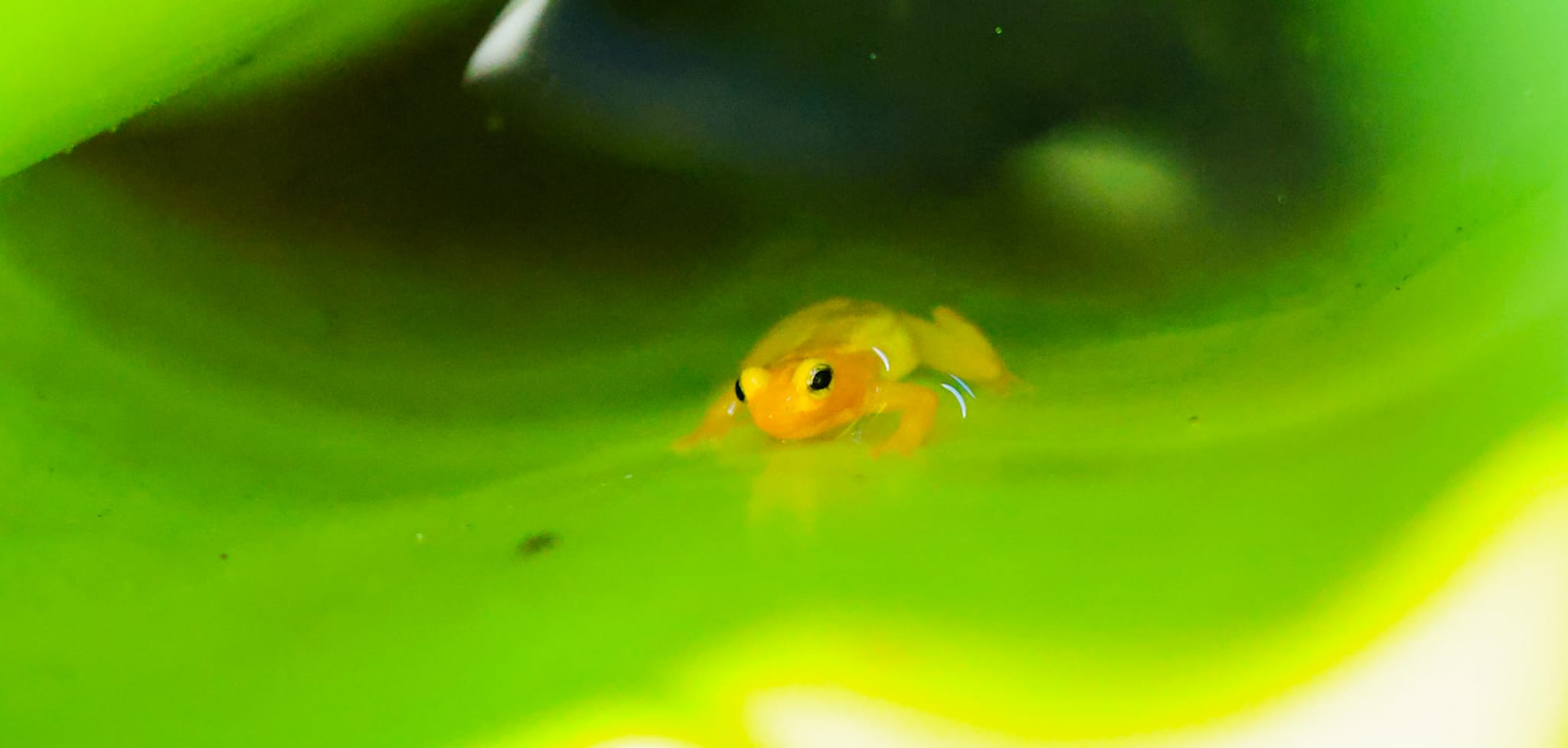
One of the highlights was seeing the golden rocket frogs. I had been told how small they were, but that does not really register until you are crouched down, scanning the ground, and suddenly notice something no bigger than your fingernail moving near your feet. It was one of those moments that pulls you into the scale of the ecosystem and reminds you how much life exists beyond what immediately catches your eye.
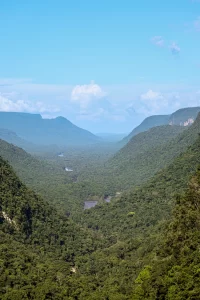
I was also struck by the surrounding landscape. The Pakaraima Mountains and the flat-topped plateaus felt otherworldly. The mix of dense tree cover and exposed rock formations made the terrain feel ancient, shaped over millions of years by geological forces that are still at work today. It is the kind of place that makes you pause and recalibrate your sense of time.
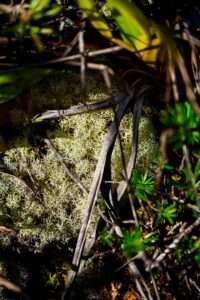
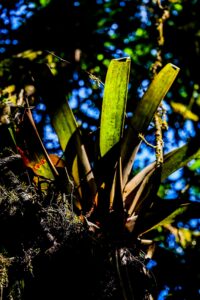
Because I have been fortunate enough to experience more remote, non-tourist areas during this project, this visit felt different. It was beautiful and meaningful, but it also left me wanting more. Knowing that there are vast areas of the park that most visitors never see, and that require days or weeks of travel to access, changes how you experience a place like this. You start to think less about checking a box and more about what it would mean to truly understand the landscape.
I kept thinking about stories I have heard from people who travelled through Guyana decades ago, before modern infrastructure made certain routes easier or harder, depending on how you look at it. Some talked about hiking for days through the Pakaraimas to reach Kaieteur. I am not someone who naturally gravitates toward long treks, but something is compelling about the idea of moving slowly through different ecosystems and seeing how they connect. It is a reminder that conservation is not just about protecting points on a map, but about understanding the relationships between places.
Flying over the interior also brings up harder questions. You can see mining areas from above, reminders of the ongoing tension between development and environmental protection. These are not abstract issues. They involve livelihoods, national growth, Indigenous rights, scientific research, and long-term sustainability. Balancing access to protected areas for rangers, researchers, and communities while keeping ecosystems intact is an ongoing challenge, and one that does not have easy answers.
Being at Kaieteur near the end of this project felt symbolic. It was a place I always hoped to visit, and I am grateful I had the chance, even if it was only for a day. It reinforced why this work matters and why conservation requires both big picture thinking and attention to small details. It also reminded me that tourism can be an entry point, but it should never be the whole story.
As this chapter starts to close, moments like this feel less like endings and more like anchors. They ground the experience and make it clear that while individual roles may end, the work itself continues.
The Good
Getting to visit Kaieteur National Park and finally see Kaieteur Falls in person. Experiencing the landscape, the wildlife, and the sheer scale of the park was something I will carry with me long after this project ends.
The Challenge
Finding the right balance in everyday life as things wind down, including being mindful about spending, food, and routines, while still staying energized and healthy through a period of transition.
What’s Next
We officially begin the handover process with Nathan. That means walking through projects, identifying what can continue, what needs ongoing support, and how the team can carry this work forward in a way that feels sustainable and grounded.




No Comments