Chapter Forty : Train like your life depends on it
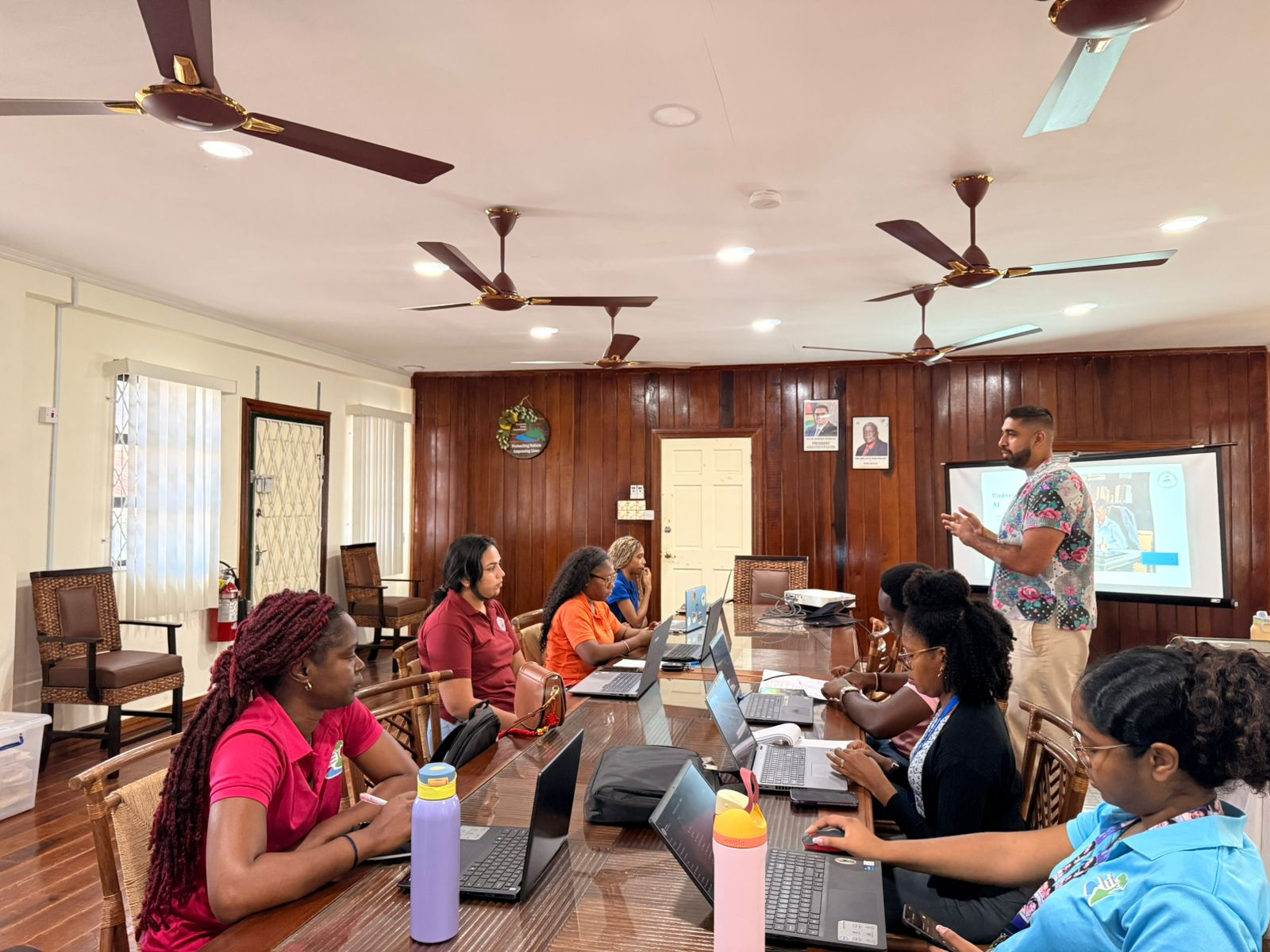
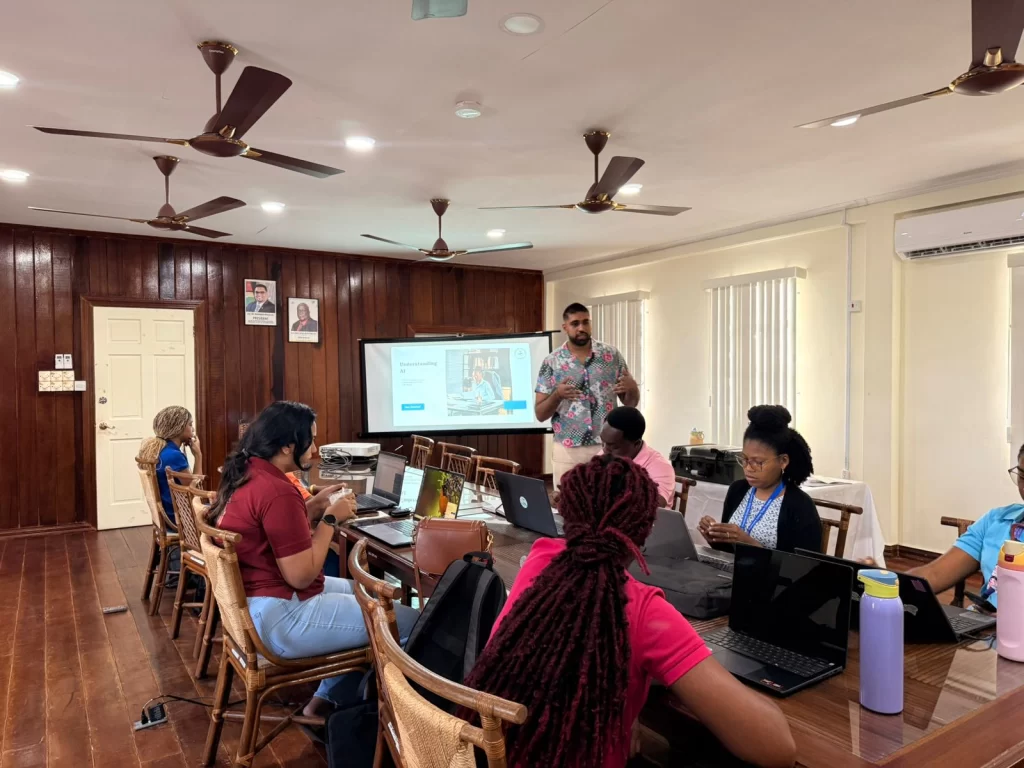
This whole week ended up being all about training and I realized again how much I enjoy this kind of work. Capacity building is one of those core things that gets talked about all the time, but when you are actually in the room sharing insights, learnings, and real practical education, it feels very different. It feels like the part of the job where you try to pass on the things you have been absorbing without even noticing. This week was the more formal version of that, instead of the usual day-to-day showing people how to do things as we go. I appreciate getting the chance to lead these sessions and I want to say thank you to everyone who helped organize them. The teams really made it easy for me to show up prepared and the folks at the Caribbean Biodiversity Fund were especially helpful with the communications training. We are only one small piece of a much bigger plan they are rolling out, but it meant a lot to contribute whatever I could and hopefully make the learning a little more fun, a little more practical, and maybe even a little more interesting.
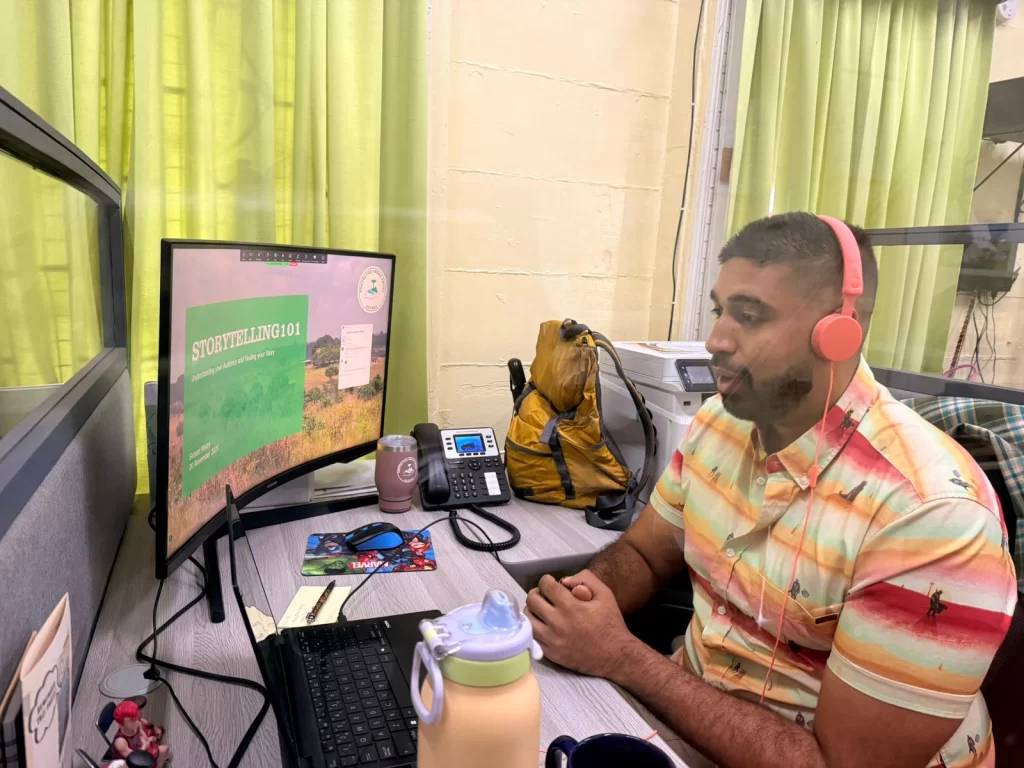
The first session was all about finding your audience and telling your story. This was one part of the larger storytelling and communications training in the CORE project. Travis and Renee ran their own sessions and I was the one in the middle, which worked out better than I expected. We designed the three parts to feel like one long connected experience instead of separate lessons. The flow mattered because people were supposed to build on what they had just learned and then carry it into the next part. My section focused a lot on personas and trying to get people to dig deeper into who they are trying to reach. I kept reminding everyone that audiences are not just a demographic label or a list of channels. They are people with challenges, thoughts, and motivations that shape what they care about. So we spent time asking questions and really trying to look at it from a professional lens. The goal was to help participants understand what their audiences might want to hear and how to shape content that feels specific and curious rather than generic.
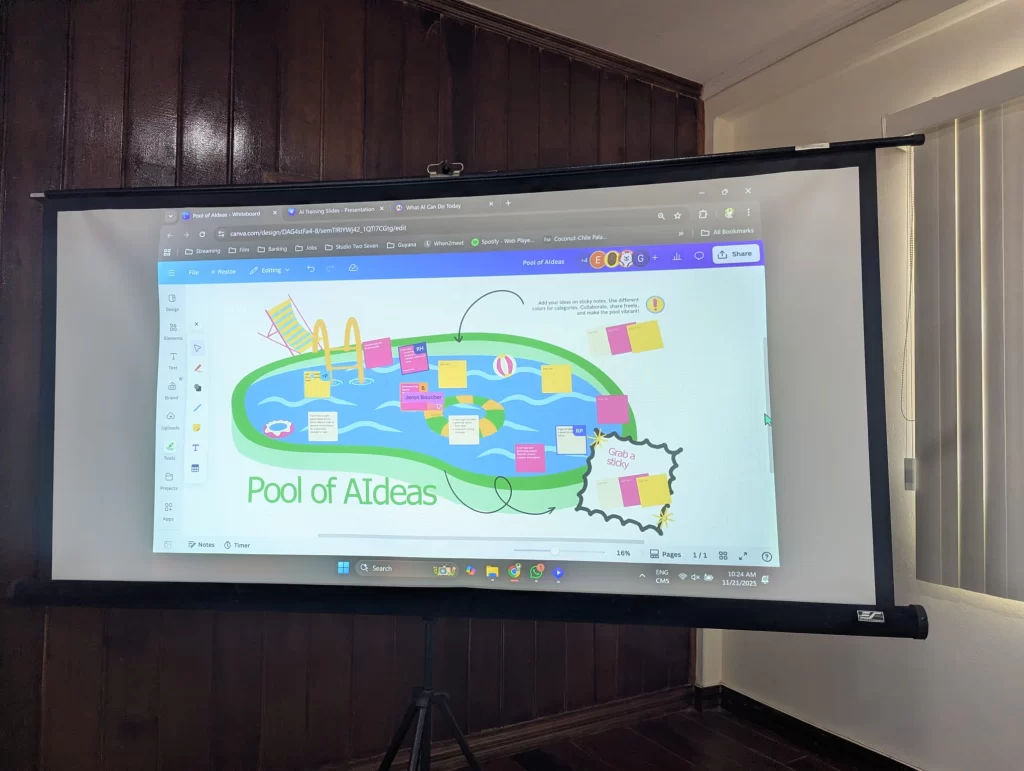
The second session was all about AI and that one was with our friends from the Protected Areas Trust and the Protected Areas Comission team. This one felt closer to home for us because it connected directly to what we do every day. Everything from conservation projects and biodiversity data to the small workflow stuff that eats up hours. I do not think there are any secrets to learning AI. I have been doing a lot more of that learning myself and the biggest thing is helping people use the systems better. It is like every other new tool. There is a learning curve, the technology changes constantly, and people are already using it, but not always in the most useful way.
One of the more interesting things we talked about was the environmental cost of AI prompts. I had heard small pieces of that before, but never really sat down to look at it. There was a Gemini or Google research paper that said each prompt takes about a quarter of a kilowatt hour of energy and around five drops of water. On its own, that does not sound like much. But then you start adding it up. If you run through ten or fifteen prompts while working on a project, that is already a noticeable impact. And then there was this Coca-Cola ad that used AI and they apparently ran over seventy thousand prompts to get the final result. If you multiply that out, seventy thousand times five drops, you get about three hundred and fifty thousand millilitres of water. That is three hundred and fifty litres. When you consider that some communities rely on rainwater or have to pay for water when it runs out, you start to feel the weight of that number. It becomes one of those hard balance questions. We want to use AI to help our teams be more efficient and more successful, but we also cannot ignore the environmental impact of making everything easier.
So I tried to keep the session very practical. Not overly technical or theoretical. We talked about prompts you can use in business settings, we compared different tools, and we spent a lot of the session just chatting about how to do things better with what we already have. It felt like it went well, and I hope the team feels more comfortable using AI in small ways that save time without overwhelming them.
The Good
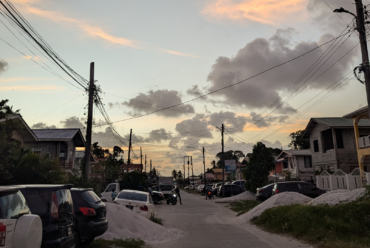
The weather has been great. It has been a little rainier and a little cloudier but also not as aggressively hot, which has been a gift. I feel like I’ve finally either acclimated or the temperature has just become slightly more reasonable.
The Challenge
The challenge has been figuring out how to close off some of the projects I have been juggling. That moment where you try to put a pin in something and say yes, this is actually finished. I am still learning how to feel that out in this environment because there is always one more thing that can be refined or added.
What Is Next
My uncle, my aunt, and my cousin are coming to visit which is going to turn the next week into a full tourism mode weekend. I am excited to show them some of the country and revisit a few places I have been wanting to see again.






No Comments